A plumbing inspection before buying a home in Kannapolis tells you what the pipes, drains, water heater and sewer line are made of, how worn they are, and what may need money soon. It is worth booking on any older home, and on any house where the general inspector flagged a leak, low pressure or slow drains.
Why a Home Inspection Is Not Enough
A general home inspector checks the whole house in a few hours. Roof, wiring, heating, windows, foundation and plumbing all get a turn. The plumbing part is usually a visual pass: run a few faucets, flush the toilets, look under the sinks and note the age of the water heater.
That pass misses a lot. It cannot see inside the walls or under the yard. It rarely tells you what kind of pipe carries the water, and it almost never looks inside the sewer line. Those are the parts of a plumbing system that cost the most to fix.
A plumbing inspection is done by a licensed plumber and looks only at the plumbing. It goes slower and deeper, and you get answers to the questions a buyer actually has:
- What is this house plumbed with, and how long does it have left?
- Is there a leak I cannot see yet?
- Is the water heater near the end of its life?
- What shape is the sewer line between the house and the street?
Book the plumbing inspection inside your due diligence period. That is the window when the findings can still change the price, the repairs or your decision.
What a Plumbing Inspection Covers
Every house is different, but a full plumbing inspection on a home you plan to buy usually covers six areas.
Supply Lines and Pipe Types
We identify what the water lines are made of: copper, PEX, CPVC, polybutylene or galvanized steel. Each has a different lifespan and a different list of weak points. We look at every pipe we can reach, in the crawl space, the basement, the attic and under the sinks, and note corrosion, old patch repairs and mixed materials.
Water Pressure
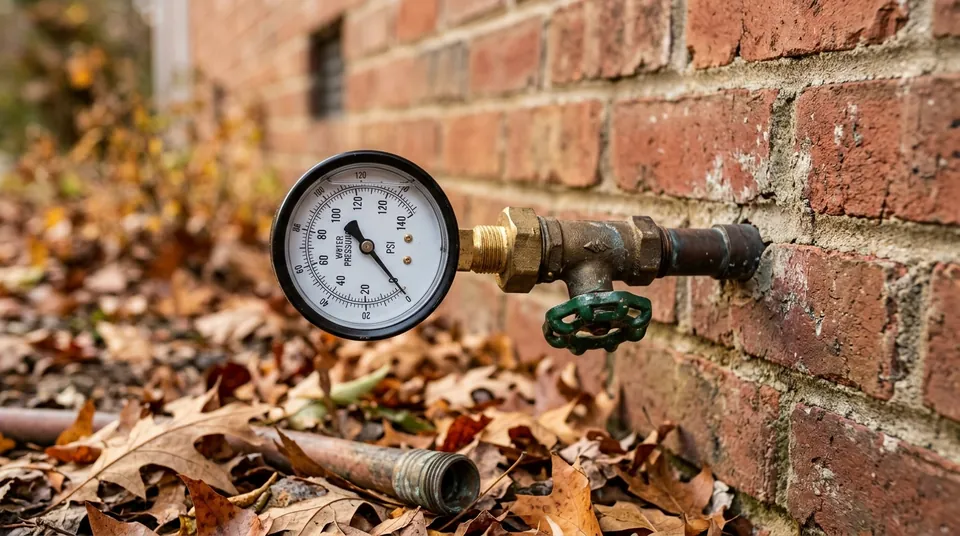
We put a gauge on an outside spigot and read the static pressure. Pressure that is too low points to narrowed pipe or a supply problem. Pressure that is too high wears out valves, toilets and water heaters faster than it should. Both are easy to measure and easy to miss on a walk-through.
Fixtures and Drains
We run every faucet, shower and tub, and flush every toilet. We watch how fast each drain empties and listen for gurgling, which can mean a venting problem or a partial blockage further down. We check shut-off valves under sinks and behind toilets, because old valves often seize or drip once they are turned.
The Water Heater
We read the label for the age and size, check the temperature and pressure relief valve and its discharge pipe, look for rust at the base and fittings, and check the venting on gas units. A tank that is near the end of its life is not a deal breaker. It is a cost you can plan for, or ask the seller to cover.
Hidden Leaks
We read the water meter with every fixture off. If the meter still moves, water is going somewhere. We also look for the quieter signs: stains on subfloor, soft spots around toilets, damp insulation in the crawl space and mineral trails on pipes.
Small leaks add up. The EPA's WaterSense program estimates that household leaks waste more than 9,300 gallons of water a year in the average home, and that nine percent of homes have leaks wasting 50 gallons or more per day (EPA WaterSense, Fix a Leak Week). In a house you are about to buy, a slow leak is also a sign of damage you have not seen yet.
The Sewer Line by Camera
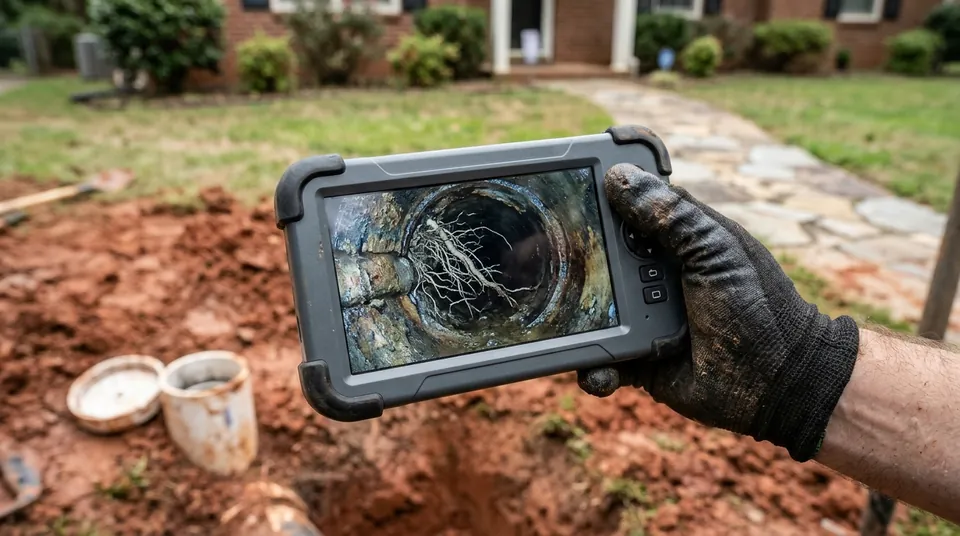
This is the part most buyers skip, and the one that matters most on an older home. We run a camera through the main line from a cleanout, or through a toilet flange if there is no cleanout, and watch the pipe all the way to the street connection. Roots, cracks, sags where water sits, and joints that have pulled apart all show up on screen.
Why Older Kannapolis Homes Need a Closer Look
Kannapolis has a lot of character homes. The old mill village houses near downtown, and many of the homes built through the middle of the last century, were plumbed with materials that are now near the end of their service life.
Here is what we find most often in older Kannapolis and Rowan and Cabarrus County homes:
- Galvanized water lines. Steel pipe coated in zinc was common in homes built before the 1960s. It rusts from the inside, which narrows the pipe and drops the water pressure. It also tends to leak at the threads.
- Cast iron drains. Cast iron lasts a long time, but after decades it can crack, scale up inside and rust through at the bottom of the pipe.
- Clay or older sewer pipe under the yard. Older sewer lines have joints every few feet. Tree roots find those joints. Red Piedmont clay swells when it is wet and shrinks when it dries, and over many years that movement can shift and crack a buried line.
- Mixed repairs. A section of PEX here, a run of CPVC there. Patch repairs are not always a problem, but they tell you a past owner was chasing leaks.
None of this means you should walk away from an older house. It means you should know what you are buying, and what it will cost to bring the plumbing up to date.
What It Costs to Skip the Inspection
We do not publish a price for inspections because the job varies. A small one-bath home with an open crawl space takes less time than a large house with no cleanout and a tight crawl space. Here is what changes the time involved:
| Factor | Why it matters |
|---|---|
| Size of the home | More bathrooms and fixtures take longer to test |
| Sewer camera | Adds time and equipment, but shows the line you cannot see |
| Cleanout access | No cleanout may mean pulling a toilet to reach the line |
| Crawl space | Tight or wet crawl spaces take longer to inspect safely |
| Leak tracing | Hunting a leak the meter shows takes longer than a routine check |
A whole-home check usually takes one to two hours. Adding a sewer camera brings most homes to two or three hours. You get an estimate before any work starts, so you know what is included.
The real comparison is not the cost of the inspection. It is the cost of finding out after closing. A sewer line that needs replacing, a house full of galvanized pipe or a water heater that fails the first winter all land on the new owner once the papers are signed.
How to Use the Findings Before Closing
The point of an inspection is to give you choices. Once you have the findings, you can:
- Ask the seller to repair. For a clear problem, such as a leaking supply line or a cracked sewer section, a seller repair before closing is common.
- Ask for a credit or a lower price. If you would rather choose your own plumber and schedule the work yourself, a credit at closing lets you do that.
- Plan and budget. Some findings are not urgent. A water heater with a few years left or galvanized pipe that still has decent pressure can go on a list for later.
- Walk away. Rarely, the plumbing tells you the house will cost far more than the listing suggests. Better to know now.
Whatever we find, we explain it in plain terms: what is urgent, what can wait and what is fine. If you want repairs, you get an estimate. If you do not, there is no pressure to book anything.
Questions to Ask Your Plumber
- Will the inspection include a sewer camera, or is that separate?
- Can I be there to watch and ask questions?
- Will you show me the camera footage?
- Will you tell me which findings are urgent and which can wait?
- Are you licensed in North Carolina? (Ask for the license number. Ours is 37106.)
When to Book It
Book the plumbing inspection as soon as your offer is accepted. Due diligence periods in North Carolina move fast, and you want the findings in hand while you can still negotiate.
It is worth booking on almost any home, and especially when:
- The house was built before the 1970s
- There are large trees between the house and the street
- The general inspector noted low pressure, slow drains, stains or an old water heater
- The home has been empty for a while, which can hide leaks and dried-out drain seals
- You see newer flooring or fresh paint in a bathroom, which can cover old water damage
It helps if you are there. You can see what we find as we go. If you cannot make it, the seller or your agent can let us in, and we walk you through the results afterward.
Book a Plumbing Inspection in Kannapolis
Shield Plumbing is a family-owned, licensed plumber based in Landis, serving buyers and homeowners in Kannapolis, Concord, China Grove, Salisbury and the towns around them. Our plumbing inspections cover supply lines, drains, fixtures, the water heater and, when needed, a camera check of the sewer line. If you are buying in Kannapolis, see our plumbing inspection service in Kannapolis. If the camera shows a problem, our sewer line repair team can explain your options.
Call or send us a message with the address and your closing timeline, and we will tell you what the inspection will include.